Back to Showcase
The Public Health Data Clustering System utilizing the Fuzzy Gustafson-Kessel (FGK) algorithm successfully analyzes and groups more than 38,000 public health records collected from the four districts of Banda Sakti, Blang Mangat, Muara Dua, and Muara Satu in Lhokseumawe City. The analysis is based on six major disease indicators: Hepatitis, Dengue Fever (DHF), Stroke, Diabetes Mellitus, Tuberculosis (TB), and Hypertension.
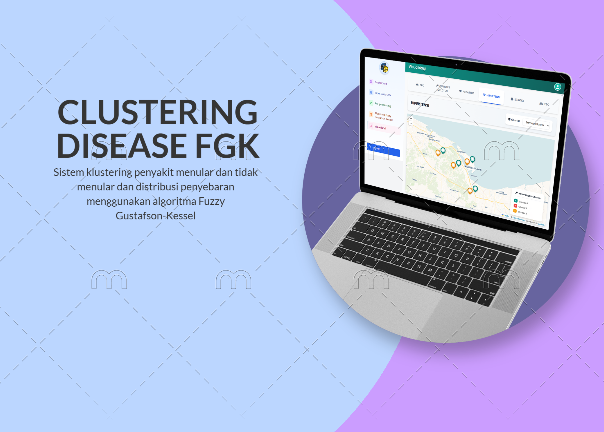
By generating three distinct clusters, the system effectively identifies regional health patterns and presents the results through tables, statistical charts, and interactive geographic map visualizations. The use of the Fuzzy Gustafson-Kessel algorithm allows each record to have varying degrees of membership across clusters, providing a more flexible representation of complex health data than conventional clustering methods. Consequently, the system serves as a valuable decision support tool for healthcare authorities, enabling more effective resource allocation, targeted intervention strategies, and evidence-based public health policy planning.




Project Summary
By generating three distinct clusters, the system effectively identifies regional health patterns and presents the results through tables, statistical charts, and interactive geographic map visualizations. The use of the Fuzzy Gustafson-Kessel algorithm allows each record to have varying degrees of membership across clusters, providing a more flexible representation of complex health data than conventional clustering methods. Consequently, the system serves as a valuable decision support tool for healthcare authorities, enabling more effective resource allocation, targeted intervention strategies, and evidence-based public health policy planning.
System Galleries